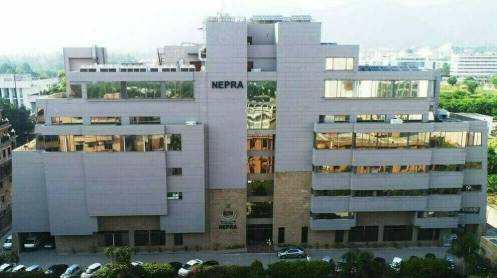
ISLAMABAD: The National Electric Power Regulatory Authority (NEPRA) on Wednesday raised serious concerns over the proposed cross-subsidy component in the government’s plan to introduce uniform Use of System Charges (UoSC), indicating close scrutiny before a final decision is made.
The concerns emerged during a public hearing on the federal government’s motion seeking uniform application of UoSC across all distribution companies (DISCOs), including K-Electric. Stakeholders from industry and trade strongly opposed the proposal, arguing that the charges are excessive and include significant cross-subsidies unrelated to actual transmission and distribution costs.
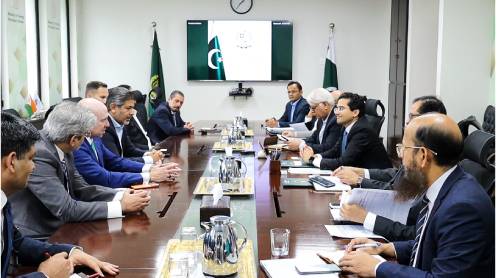
The hearing, held at NEPRA headquarters in hybrid mode, was attended by representatives from the Power Planning and Monitoring Company (PPMC), Independent System Market Operator (ISMO), Ministry of Energy, FPCCI, APTMA, and other industrial stakeholders.
The government’s proposal follows NEPRA’s earlier determination of grid-related UoSC for eleven ex-WAPDA DISCOs on December 18, 2025. With the Competitive Market Operations Date (CMOD) declared on January 22, 2026, and wheeling auction guidelines issued the same day, authorities are now pursuing uniform charges under the National Electricity Plan.
Under the proposed structure, UoSC has been set at Rs6.69 per kWh for 132kV users, Rs8.51 per kWh for 11kV consumers, and Rs5.60 per kWh for 0.4kV users. A uniform Debt Servicing Surcharge (DSS) of Rs3.23 per kWh has also been proposed across all categories.
Industry representatives warned that the absence of a clear cap or formula for wheeling charges creates uncertainty and could undermine the Competitive Trading Bilateral Contract Market (CTBCM) framework. They argued that the proposed cost structure—potentially reaching around 3.5 cents per unit—could hurt industrial competitiveness and deter investment.
FPCCI’s representative highlighted that a major portion of the charges consists of stranded costs and cross-subsidies, which are not linked to actual service delivery. Concerns were also raised over the lack of detailed cost breakdowns from distribution companies, making independent verification difficult.
Stakeholders further questioned the inclusion of the Rs3.23 per unit Debt Servicing Surcharge, arguing that it lacks clarity in the official motion and requires stronger regulatory justification.
Power Division officials, meanwhile, urged NEPRA to align its determination with recent federal cabinet decisions aimed at removing cross-subsidies from industrial tariffs. ISMO representatives maintained that even with the proposed charges, the system remains viable for industrial users.
Officials from PPMC clarified that K-Electric has been excluded from the current calculation due to ongoing legal disputes over its tariff and will be included once resolved.
NEPRA members, during the hearing, repeatedly questioned the methodology behind the proposed charges—particularly the cross-subsidy element—signaling that the regulator will conduct a detailed review before issuing its final determination.
Story by Mushtaq Ghumman